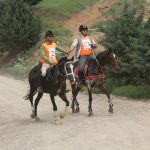
In a world full of noise and speed, a horse remains one of the few creatures that brings us back to honesty. You can trick people with words, but you can’t trick a horse. They read energy, intention, rhythm, and even the tension hidden inside our body. This is why many trainers say: a horse is not a vehicle — it is a mirror.
As an equestrian photographer and storyteller, Hakan Kaya from Equine Story has seen this countless times behind the camera. The best riders are not the loudest, the strongest, or the most dominant. The best riders are those who listen.
Here are five real reasons why horses teach us about ourselves.
1. Horses are born to flee, not to fight
A horse is a prey animal. Its instinct is to run first and question later. When a horse spooks, it is not “being bad” — it is simply surviving. Good riders do not punish fear; they guide it.
Many great horsemen say that women often connect deeply with horses because they understand vulnerability. When a horse feels safe, it will walk through fire for you. When it feels threatened, it only has one defense: distance.
Fear is not the enemy. Fear is information.
2. Horses are emotional, not mechanical
Anyone who has ever truly bonded with a horse knows this: they want to please. They want to belong. If there is no herd, the rider becomes the herd.
Ten minutes of soft grooming can be more valuable than an hour of schooling. Some riders talk to their horses, sing to them, or just sit next to them in silence. It sounds simple, but horses notice everything — your breath, your heartbeat, your softness.
History is full of stories about riders calming impossible horses not with force, but with empathy. Sometimes, the bravest thing a rider can do is simply be gentle.
3. Horses are smarter than people think
Anyone who calls a horse “stupid” has never trained one correctly. Their brain may be smaller, but intelligence is not measured by weight. A horse can learn patterns, recognize voices, remember places, and even dream. Science shows that the emotional part of the equine brain works very much like ours.
When we treat a horse like a thinking partner — not a machine — everything changes.
4. Train both sides, or train nothing at all
Unlike the human brain, the two sides of a horse’s brain do not always communicate perfectly. A horse that trusts you on the left side might still fear you on the right. That is why great trainers teach every lesson from both directions — leading, lunging, touching, mounting.
A true partnership must be visible from every angle.
5. A horse learns only when it feels safe
You can force a horse into a trailer, but you cannot force it to understand. Real learning happens only when the horse is calm. When a trainer uses patience, reward, and repetition, the horse not only enters — it enters with trust.
Pressure creates obedience.
Calmness creates confidence.
Final Thoughts
Spend enough time around horses and you discover something unexpected: training a horse is often training yourself. Patience, clarity, softness, rhythm, breathing, confidence — the horse reflects all of it.
Women may have a natural advantage in emotional connection, but every rider, man or woman, can build a deep partnership with a horse. It starts with listening, not commanding.
As Hakan Kaya says in Equine Story:
“A horse does not care who you are in life. A horse cares who you are in the moment.”
When we learn to ride with our heart, the horse becomes more than an animal — it becomes a mirror.