Inside the 100th Gazi Koşusu: A Century of Horse Racing Tradition in Türkiye
More than 100,000 people gathered at Veliefendi Racecourse in Istanbul for a single horse race. But the Gazi Koşusu is far more than a sporting event. For over a century, it has been the most prestigious Thoroughbred race in Türkiye and one of the country’s most important sporting traditions.
Experience of the Event
In this video, you’ll experience the atmosphere of the 100th running of the Gazi Koşusu through my lens—from the first moments of arriving at Veliefendi to the final celebrations after the race. Along the way, you’ll see the Wall of Champions, historic trophies, the famous paddock, the opening ceremony, and the excitement as the nation’s finest three-year-old Thoroughbreds prepare to enter the track.
The race concluded with a memorable victory as legendary jockey Halis Karataş, at the age of 53, guided Bay Nalçakan to win the historic 100th edition of the Gazi Koşusu, adding another remarkable chapter to an already legendary career.
Yet the true beauty of the day extended far beyond the winner’s circle. Families, children, lifelong racing fans, and first-time visitors all came together to celebrate a tradition that has connected generations for one hundred years.
If you’ve never experienced the Gazi Koşusu before, this video offers a glimpse into why it remains one of the most iconic horse racing events in the world.
You can read the complete narration of the video below.
Why did more than 100,000 people come here to watch a horse race?
I found the answer the moment I entered Veliefendi Racecourse.
This is the story of the 100th Gazi Koşusu, one of the most legendary sporting events in Turkey.
From the moment you step into Veliefendi, you realize this is not just a racecourse. The whole place smells of history.
The races started at 2:00 p.m., and the day’s schedule was carried out exactly as shown on the boards.
There were plenty of picnic areas and food stalls, turning the day into a huge celebration for families, especially for children.
Wherever you looked, you could see signs of one hundred years of pride.
From posters and commemorative symbols to the Wall of Champions.
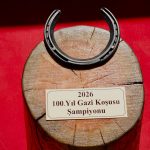
At the main VIP entrance, historic trophies were on display, each telling part of the story of Turkish horse racing. And the statue of Mustafa Kemal Atatürk reminded everyone of the philosophy behind the creation of this race.
Little by little, the atmosphere of the venue began to change.
Ladies wearing elegant hats and formal dresses, special guests, journalists, and thousands of racing fans kept arriving every minute.
Inside the paddock, the horses were going through their final preparations, while outside, people carefully studied each horse’s condition, because they only had a few minutes left to place their bets.
The closer we got to the main race, the greater the excitement became.
The opening ceremony began with the Turkish National Anthem, followed by the official parade of the children from the Jockey Club Riding School.
Then came the moment everyone had been waiting for.
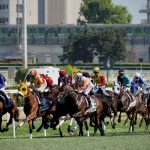
Twenty-two of the best Turkish-bred three-year-old Thoroughbreds entered the track, ready to write their names into history.
In the end, Halis Karataş, at the age of 53, riding Bay Nalçakan, became the winner of the 100th Gazi Koşusu.
But perhaps the most beautiful part of the day was seeing children, teenagers, adults, and elderly people—from every generation and every walk of life—spending an entire day together and becoming part of a one-hundred-year-old tradition.
As night fell, the hippodrome slowly became quieter, and I was happy to have had the opportunity to document one of the most important moments in the history of horse racing.