When Sweat Disappears: Understanding Anhidrosis in Horses
The Silent Struggle Under the Sun
Sweating is a horse’s natural shield against heat. It’s the way the body breathes when the world turns hot. But imagine a moment when that shield disappears, when sweat no longer comes.
That is Anhidrosis, a condition that quietly steals the horse’s ability to release heat, forcing its body into a silent fight against exhaustion.
Under the cinematic lens of Equine Story, this disorder is not just science; it’s emotion. Each dry flank and shallow breath carries a question:
How long can a silent body endure the sun?
Understanding What Happens
In healthy horses, sweat glands open like small thermostats under the skin, pushing heat away through moisture.
When anhidrosis begins, those glands lose sensitivity. The message from the brain, cool down, arrives, but the gates remain closed. No sweat appears on the skin, even when the temperature demands it.
The result: rising heart rate, fatigue, and restlessness. The horse may breathe faster, move less, and seek shade instinctively, but the inner fire stays trapped.
Signs That Whisper of Anhidrosis
Caretakers often notice the condition during warm seasons, especially in tropical or humid areas. Look for small but revealing details:
- Lack of sweat during exercise or high temperatures.
- Fatigue and increased respiratory effort after mild activity.
- Dry skin, unusual warmth, or dull coat.
- Reluctance to work and slower recovery after effort.
Sometimes, the horse’s eyes appear tired, as if each breath takes more concentration than before.
Why It Happens
The exact cause remains unclear, but long exposure to intense heat and humidity plays a major part.
Certain breeds, Thoroughbreds, Arabians, and warmbloods, show higher sensitivity. Overworked sweat glands can lose function, almost like a piano key that has been pressed too often.
Even stress and electrolyte imbalance can disturb the delicate system responsible for cooling. In the end, what seems mechanical is deeply biological, and emotional.
Caring for a Horse That Cannot Sweat
The cure for anhidrosis is not simple, but care makes the difference.
Here’s how caretakers can help their horses cope:
- Provide shade and cool, clean water at all times.
- Avoid intense training during the heat of the day.
- Increase ventilation and use fans in the stable.
- Offer electrolyte supplements (under veterinary guidance).
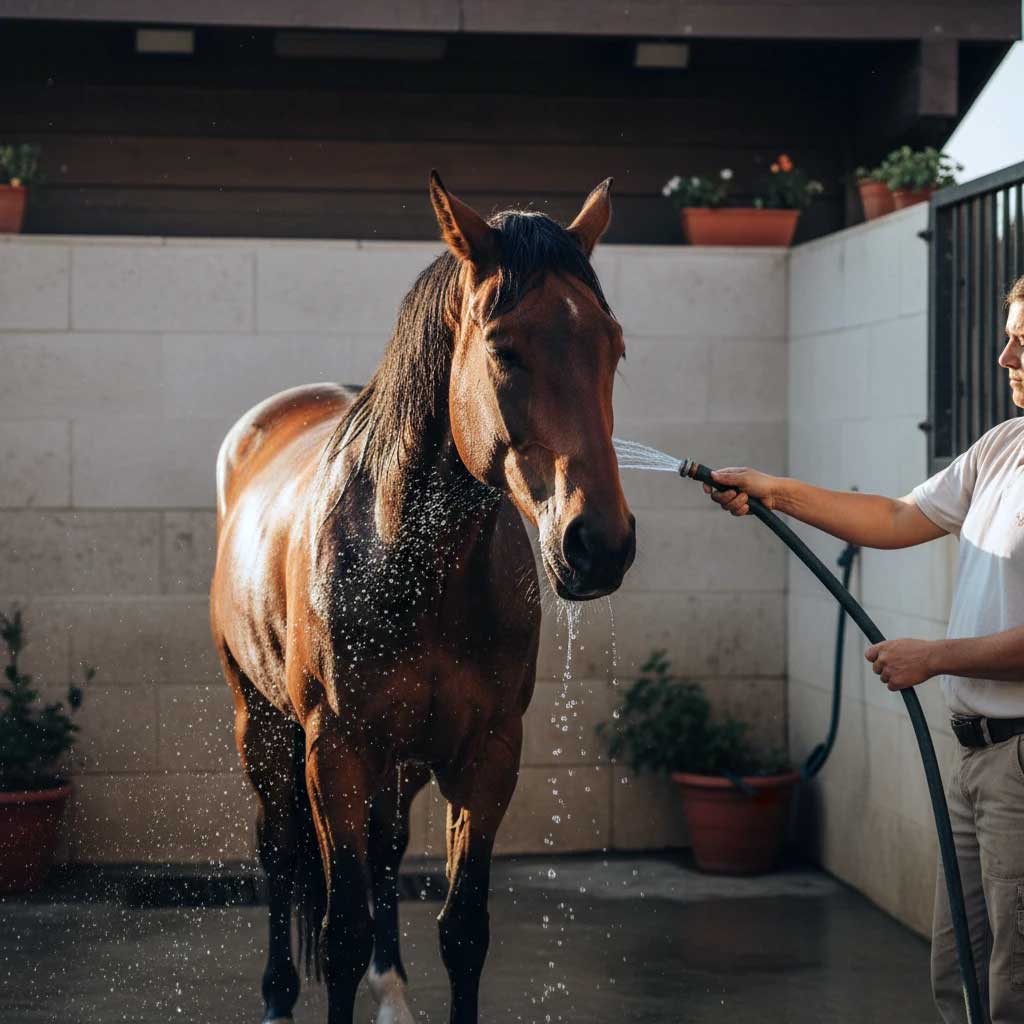
- Bathe with water occasionally to mimic lost sweat function.
Every small measure counts, not as treatment alone, but as compassion.
Hakan Kaya often describes it as “helping the horse breathe through human kindness.”
The Emotional Layer of Heat
Heat exhaustion changes everything, not just the physical endurance but also the emotional state.
A horse who cannot sweat often grows quiet, conserving energy even when the desire to move remains. Watching this stillness can break a caretaker’s heart, yet it reminds us: sensitivity is part of strength.
Within the Equine Story spirit, caring for an anhidrotic horse becomes a test of empathy — because what you cannot see, you must feel.
Learning to Listen to Dry Skin
When sweat disappears, understanding must replace instinct.
Digital thermometers and careful daily observation transform simple care into science guided by emotion. Never rush, never assume.
Monitor heart rate, breathing, and behavior as reflections of the horse’s inner condition. Every sign, however subtle, speaks.
Closing Thought
Anhidrosis teaches a truth hidden in sunlight, that even silence in the body carries meaning. Caring for such horses is not about fighting nature; it’s about walking alongside it, patiently and gently.
Written by Hakan Kaya for Equine Story, reminding us that true equine care listens even to what the body cannot say.