Opening: The Quiet Change
You don’t always hear it happen. One moment the stride is silk: the next, something small feels different heat under your palm, a breath of swelling, a careful step. Tendon injuries in horses often arrive like a whisper, not a thunderclap. In the world of Equine Story, we believe those whispers matter. They’re the body asking for grace.
Curated by Hakan Kaya, International Equestrian Photographer, Filmmaker & Storyteller, this is a tender guide to what goes on under the skin, how to read the early signs, and how to bring a horse back with patience and love.
What A Tendon Really Does
Inside the leg, tendons are the strong ropes that connect muscle to bone. They load, stretch, and spring back with every stride.
- The superficial digital flexor tendon (SDFT) sits just behind the cannon and is the one most often injured in speed and jumping.
- The deep digital flexor tendon (DDFT) lies deeper, working like a quiet powerhouse to flex the joints. Ligaments, by contrast, connect bone to bone. Tendons move; ligaments guard.
Why Tendons Get Hurt
Tendon injuries in horses are common in racing and show jumping, but any horse can be at risk. The usual culprits are simple and very human:
- Fast work without a gentle warm‑up.
- Sudden stops, sharp turns, and explosive starts.
- Uneven or deep footing.
- Heat build‑up in the legs during intense work; tightly wrapping or heavy boots can trap heat and raise the risk.
It’s rarely about “toughness.” It’s about asking tissues to do more than they were ready to give.
How To Recognize The Signs
In many cases, the signs bloom a few hours after work:
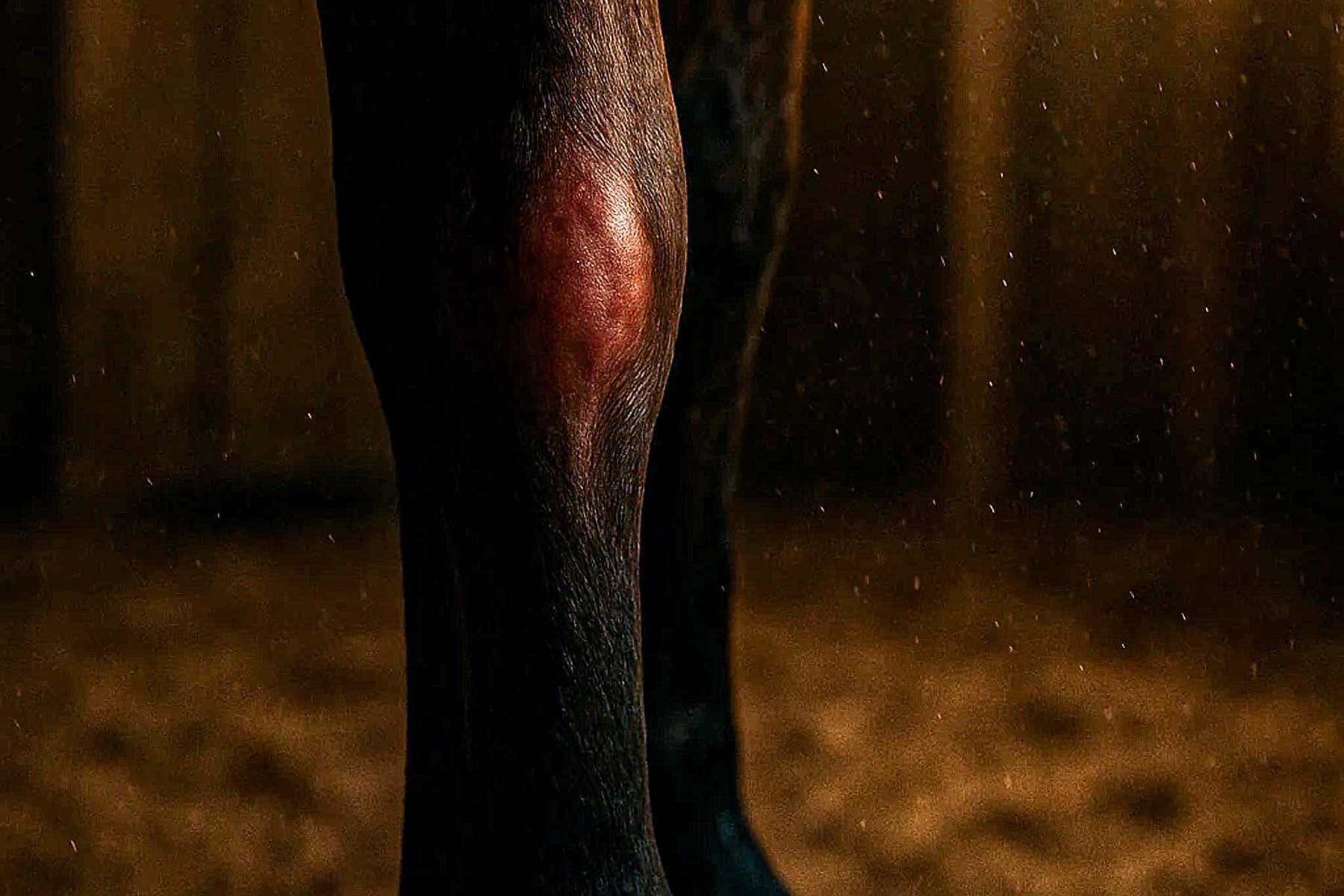
- Warmth over the back of the cannon bone.
- Puffiness or swelling that wasn’t there before.
- Tenderness to touch; your horse may flinch or pin an ear.
- A subtle change in gait, or a “bowed” curve to the tendon area.
When you feel heat or see swelling, treat it as a message. Early care changes the ending.
The Three Grades (Made Simple)
– Grade 1: Inflammation and mild swelling. Fibers are irritated, not torn.
– Grade 2: Strain with partial fiber damage. Swelling is clearer; the tendon feels thicker.
– Grade 3: Partial or complete tear. Marked swelling, heat, and pain; the tendon looks “bowed.”Healing takes time, anywhere from 3 months to a year. Tendons can heal strongly, but the new tissue is never identical to the original. That’s why pacing the comeback matters.
First Aid: The Golden 72 Hours
- Rest immediately. Stop work and keep movement calm and controlled.
- Cold therapy: Ice or cold hosing for 15–20 minutes, several times a day for up to 48 hours to tame inflammation.
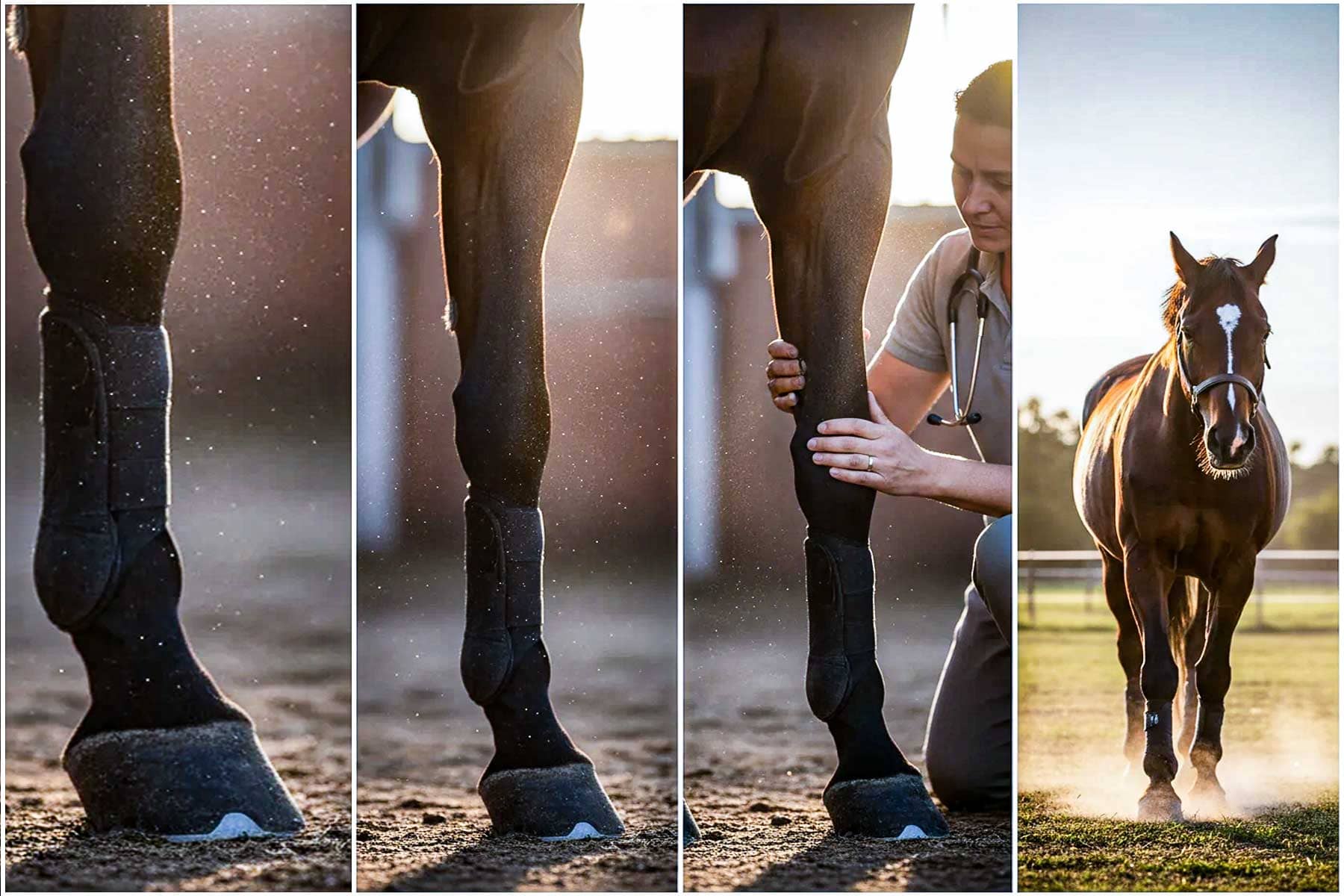
- Support bandaging: Apply correctly fitted bandages to control swelling (never too tight; never on a wet leg).
- After 72 hours, gentle warmth can help circulation if your vet recommends it.
- Talk to your veterinarian about anti‑inflammatories and pain control; they guide dosage and safety.
Rehabilitation: From Stillness to Stride
Rehab is a rhythm, not a race.
- Weeks 1–2: Stall rest or small pen turnout with hand‑walking as advised. Keep steps even and quiet.
- Progressive loading: Add time to hand‑walking, then introduce straight‑line walking under saddle, then short trots on good footing, only on a vet‑approved timeline.
- Surfaces matter: Flat, consistent footing protects healing fibers.
- Feed for recovery: Balance energy without pushing hot behavior. Watch body condition. Keep hydration easy and clean.
- Review boots and bandages: Use protection to prevent strikes, but avoid trapping heat during intense sets.
Advanced and Severe Cases
In deeper injuries, your vet may consider:
- Imaging: Ultrasound to map fiber damage and track real healing, not just how it looks outside.
- Adjunct therapies: Magnetic boots, controlled light/heat, or other modalities as part of a vet‑directed plan.
- Suture and wound care: In cut tendons, special stitching and strong infection control are vital. Every tool is there to protect alignment, reduce stress, and encourage organized fiber repair.
The Honest Odds
With thoughtful care, many horses, often quoted around the majority, return to work. Yet re‑injury risk is real if training ramps too fast or footing and heat aren’t managed. The tendon remembers how kindly you walked it back to strength.
Warm‑Up Is Welfare
A good warm‑up is a love letter to tendons:
- Start slow. Walk until breathing and muscles feel open.
- Build gradually. Add trot, then canter. Save sharp turns and fences for when the body is truly warm.
- Cool down with the same care. Let heat escape; let the heart rate drift down gently.
Footing, Heat, and Common Sense
- Choose even, honest ground. Deep or uneven footing twists and overloads.
- Mind the temperature inside boots and bandages during hard sets. Heat fatigues fibers.
- Train with tomorrow in mind. Frequency and intensity should rise like a sunrise, not a spark.
When To Call The Vet
- Any new heat, swelling, or tenderness.
- A bowed outline on the back of the cannon.
- Lameness that lingers beyond a day of easy rest.
Vets give you certainty, a timeline, and check‑points. Trust the map.
Closing: The Return of Quiet Confidence
One day, after weeks of small steps, your horse takes a straight, easy stride that feels like a promise. That promise was built on listening early, cooling the fire, and rebuilding with patience. Tendon injuries in horses don’t have to end the story. They can deepen it, teach us to protect the spring in every step.
In Equine Story, we believe a horse’s body is poetry—living lines of strength and memory. Curated by Hakan Kaya, this is our quiet vow: guard the tendons, guard the trust, and the stride will sing again