The Language of Touch: Why Horses Use Their Legs and Hooves to Speak
Every Gesture Has a Meaning
A horse’s silence is full of movement.
Even when it does not neigh or snort, its body speaks, especially through its **legs and hooves**.
The way a horse lifts, stretches, or strikes its leg can tell you everything about its mood, intention, or comfort.
Those movements, while subtle, are not random. They are part of an ancient vocabulary, a system of communication evolved in herds long before human voices ever reached the stable.
When Curiosity Meets Motion
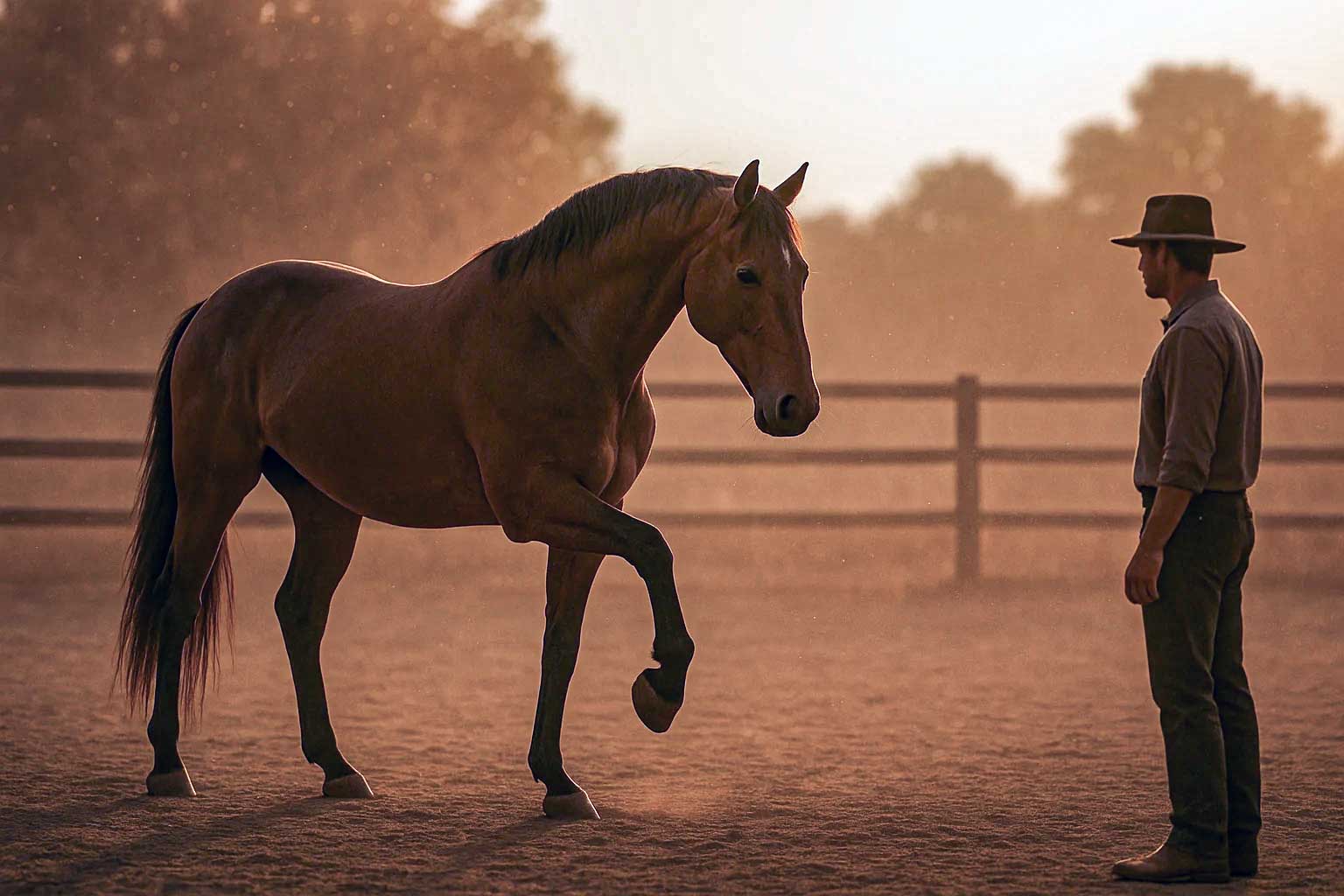
Have you ever seen a horse gently paw the ground while watching something new?
That quiet rhythm is curiosity in motion.
It’s how a horse asks the world: *“What’s this? Should I move closer, or keep my distance?”*
The motion often appears when meeting new people or objects, a reflection of intelligence and emotional depth.
In such moments, the hoof becomes a tool of exploration rather than defense.
Pawing as Emotion — Not Just Habit
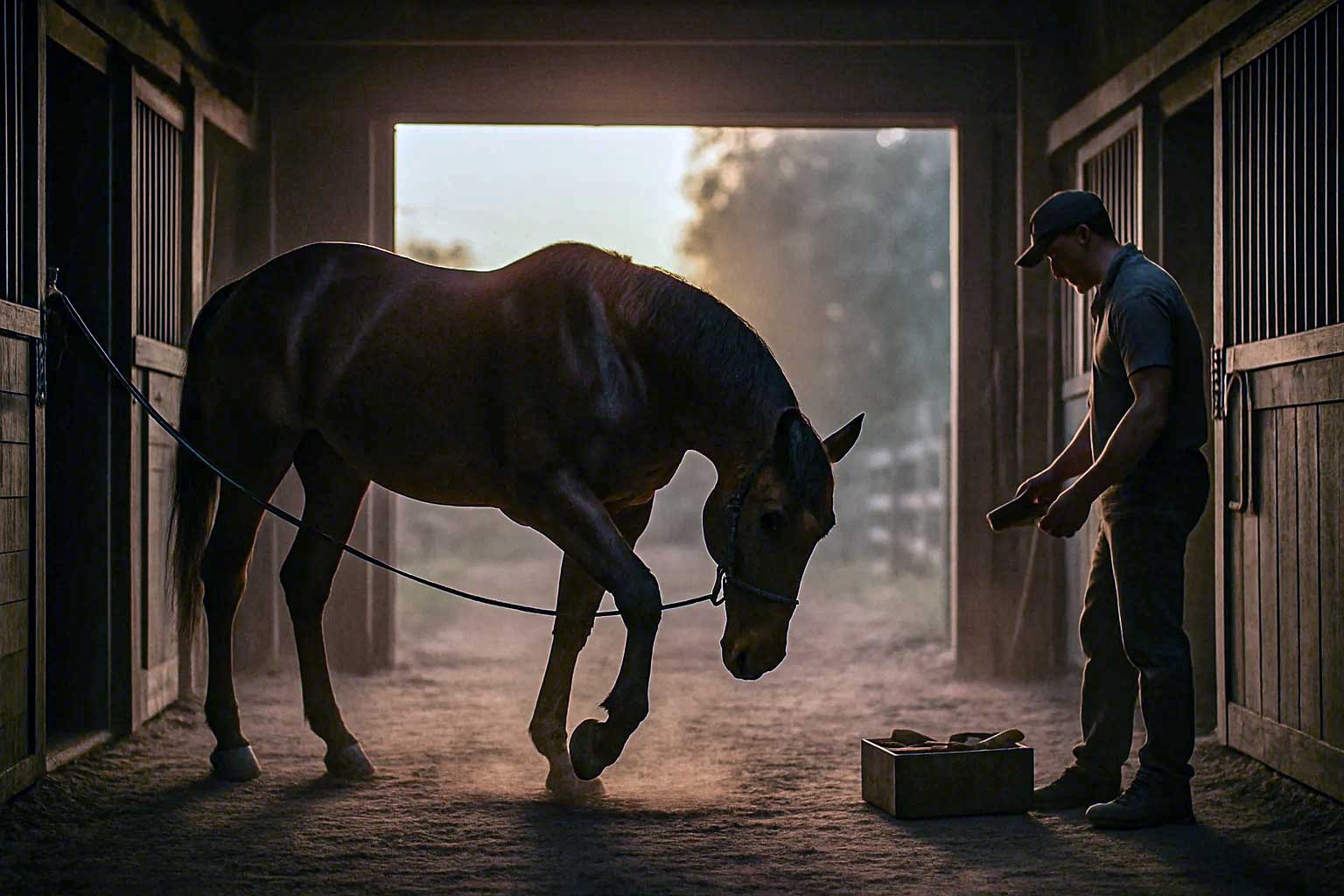
Pawing the earth can express excitement, impatience, or even anxiety.
In competitive settings, nervous horses often dig at the surface before the ride — muscles tense, heart racing.
The gesture may also be a way to release energy or draw attention, much like a human tapping their foot during anticipation.
Understanding this action means reading the surrounding emotion, not just the movement itself.
As **Hakan Kaya** often says in his training films, “Every repeated gesture hides a reason, and finding that reason is the art of true horsemanship.”
Sign of Dominance and Warning
In herd dynamics, leg gestures can escalate from communication to authority.
A horse might strike its front leg, raise a hind foot, or even stamp the ground to warn others nearby.
These signs mark boundaries, invisible lines drawn by instinct and hierarchy.
Such expressions remind us that horses are not passive creatures; they possess strong personalities and natural social rules.
Recognizing them prevents misunderstanding, allowing harmony instead of confrontation.
When the Hoof Becomes Gentle
Not all leg gestures carry tension.
A horse touching you softly with its hoof, or lifting a leg toward you with calm eyes, may show affection or seeking reassurance.
In bond-centered training, these gentle moments create emotional connection stronger than any rein or command.
Each soft motion is a fragment of trus, a physical conversation quietly taking place between human and horse.
The Human Responsibility
Ignoring leg and hoof signals means ignoring half of what the horse says.
Observation is not an optional skill; it is the foundation of safety and empathy.
Mistake impatience for aggression, and you risk the trust you’ve built.
A good rider listens not just with hands and reins, but with **eyes and heart**, every flick of hoof and shift of weight carries meaning.
Closing Thought
To understand horses is to learn their silent rhythm, the music beneath movement.
Legs and hooves are not mere instruments of motion; they are words, emotions, and messages from a soul that never learned to speak.
Written by Hakan Kaya for Equine Story, reminding us that communication with horses begins not in the mouth, but in the motion that whispers through the dust.