When Silence Spreads: Understanding Equine Herpesvirus (EHV)
The Invisible Enemy
Not all dangers in the stable come with sound or motion. **Equine Herpesvirus (EHV)** moves quietly, unseen, often unnoticed, until it changes everything.
It can strike the young or the strong, spreading through air, touch, or shared water buckets. Horses that once breathed beside each other in harmony may suddenly stand apart behind quarantine fences.
At **Equine Story**, we treat this not only as a medical discussion but a reflection of care, empathy, and preparedness, because love for horses begins with understanding what threatens them.
What Is EHV?
EHV refers to a group of viruses found in horses, the most significant being **EHV-1** and **EHV-4**.
Both target the respiratory system, but EHV-1 is more severe, capable of causing abortions in pregnant mares and even neurological symptoms that affect balance and coordination.
A simple cough might be the first sign, yet behind it could be a deeper struggle happening within the body’s silent defenses.
How It Spreads
The virus travels fast, through nose-to-nose contact, shared equipment, or even short-distance air droplets.
In barns or training facilities where horses breathe closely, the risk multiplies.
A single infected horse can spread the virus to dozens before any symptoms appear.
Herpesvirus doesn’t vanish easily; it hides, waiting. Once infected, horses can carry it for life, showing signs only when stress awakens it again.
Recognizing the Signs
Early symptoms of EHV resemble a common cold: fever, nasal discharge, tired posture. But sometimes, what begins as mild respiratory illness deepens into **neurological EHV**, where coordination fails, hind legs weaken, and the horse struggles to stand.
Emotionally, this stage is devastating, horse owners often speak of the helplessness of watching a proud animal fight to remain upright.
Yet, recognition is the first step toward protection.
Prevention: Care Becomes Shield
Strong management saves lives.
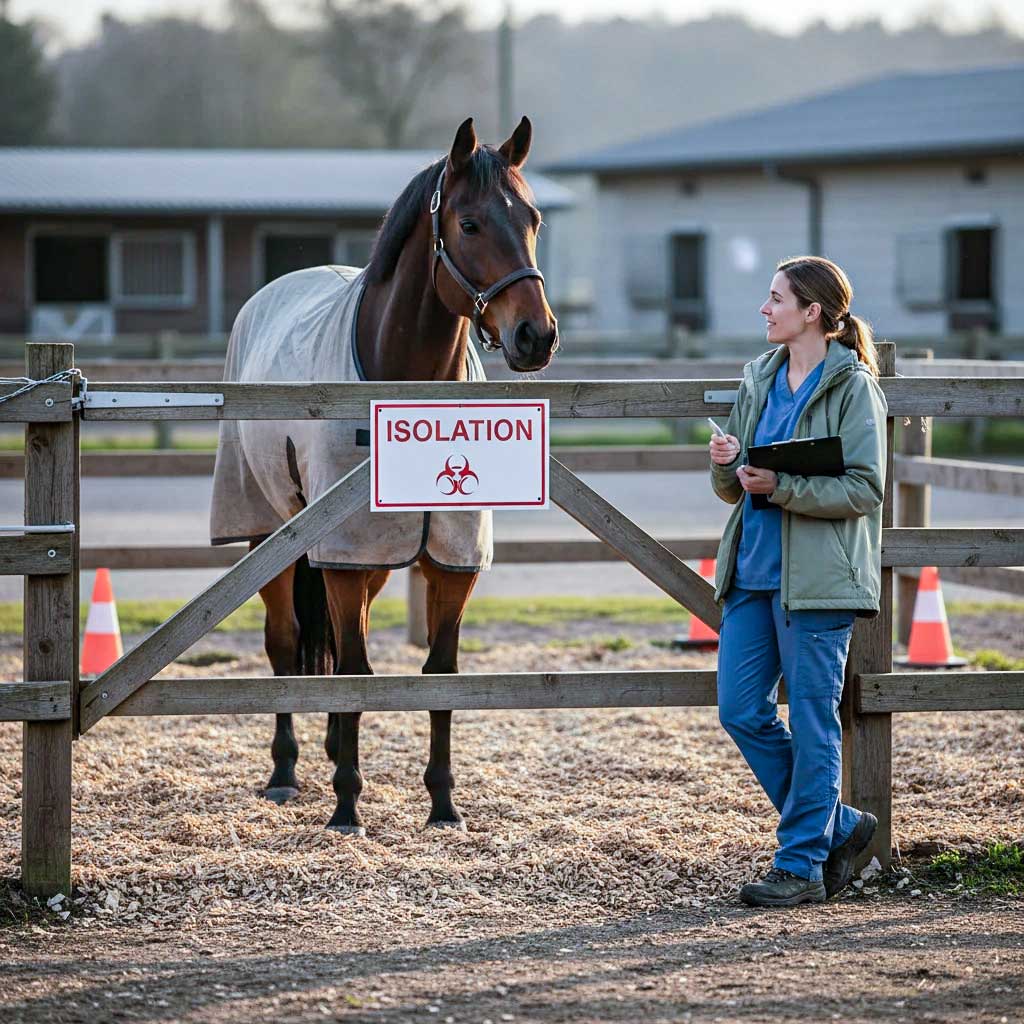
Isolate new arrivals. Disinfect shared tools. Keep vaccination schedules consistent.
And most importantly, limit movement when an outbreak emerges.
Veterinarians and caretakers worldwide follow **biosecurity protocols** designed not only to control viral spread, but to preserve trust within the stable community.
The strongest stables are not those with the tallest walls, but those built upon disciplined compassion.
The Emotional Side of Recovery
Recovery from EHV is both physical and emotional.
Horses recovering from neurological forms often regain strength slowly, guided by patient caretakers who embody what **Equine Story** celebrates, devotion beyond duty.
The bond deepens in silence: a caretaker whispering calm while applying medicine, a horse breathing steady after long rest.
These are the scenes that define our connection more than any cure ever could.
Final Thought
The fight against Equine Herpesvirus reminds us that vigilance and empathy must coexist. Science treats the symptoms; **humans heal the spirit**.
Written by Hakan Kaya for Equine Story, a reminder that every virus, though silent, teaches us the loudest lesson of all: protect with knowledge, care with heart.