Reading the Silence: The Art of Horse Examination
More Than a Routine
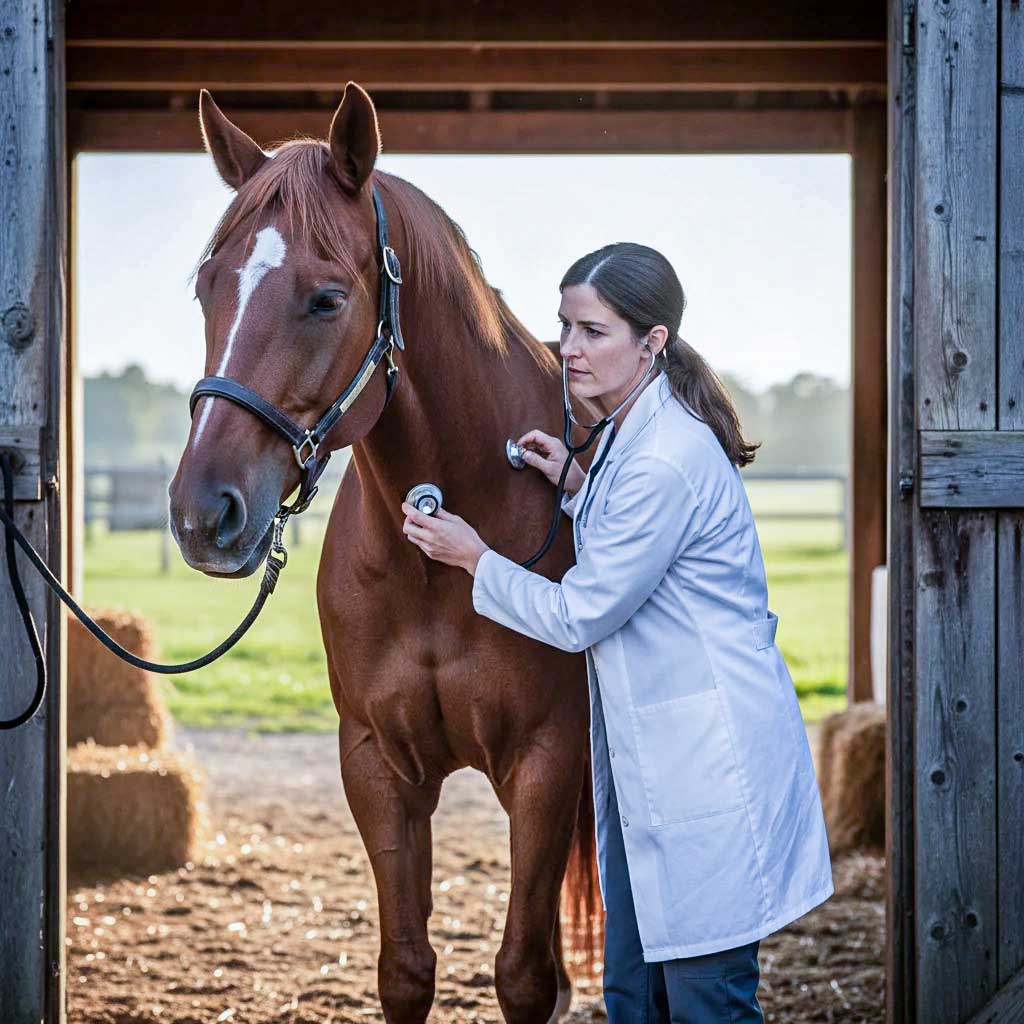
When a horse stands still under the soft light of dawn and a human steps closer, examination begins not with instruments, but with intention.
Checking a horse is not just a mechanical task; it’s an act of listening through touch and sight. It’s about recognizing how the body speaks when words do not exist.
In the world of Equine Story, examination becomes a ritual of connection, where patience becomes skill, and awareness becomes empathy.
The First Approach
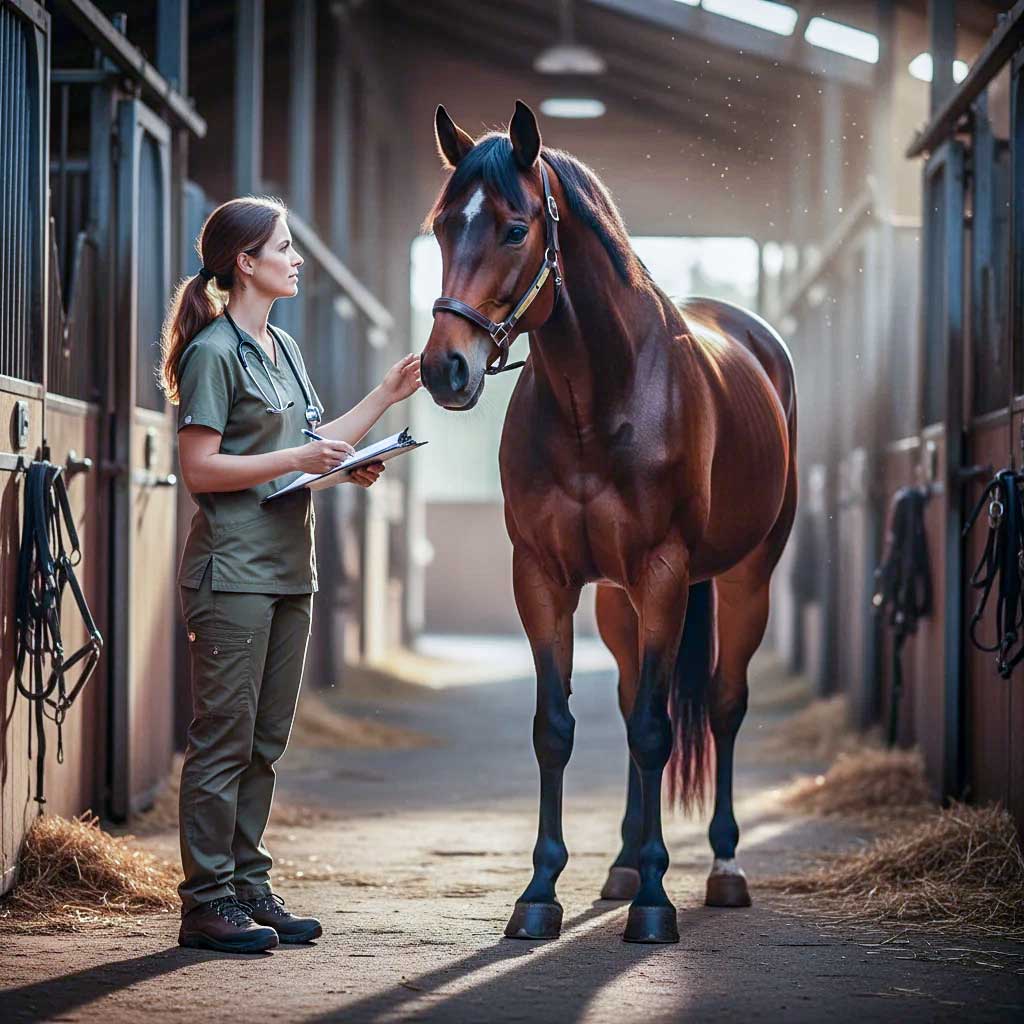
Before any hands meet fur, observation starts from a distance.
How does the horse breathe? How does it shift weight? Does it glance toward you in curiosity or keep its gaze elsewhere?
These are clues. Health lives in movement and attitude, not only in numbers or test results.
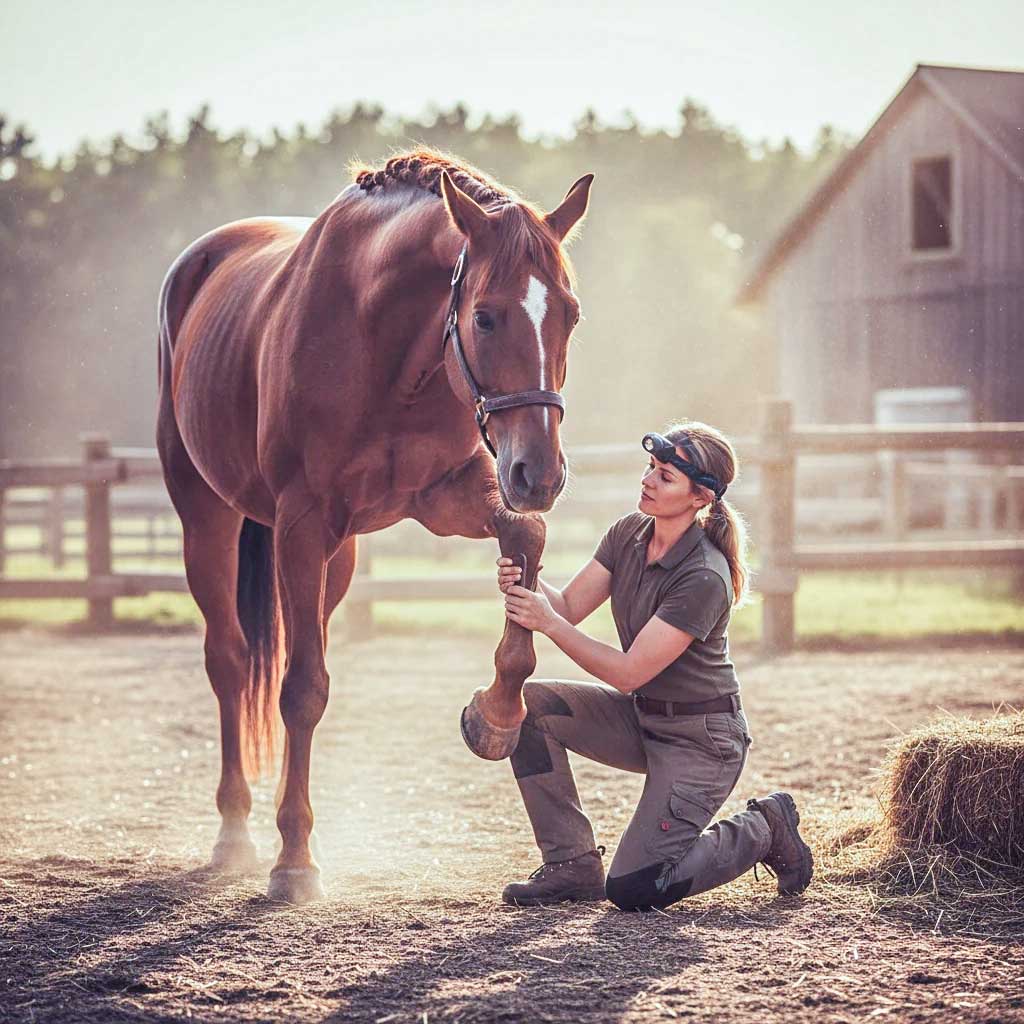
Every experienced caretaker or veterinarian knows, walking quietly around the horse reveals more than one might imagine. The way it stands, the rhythm of hooves, even the subtle tremor of knees, tells stories of balance or pain.
Touch That Learns
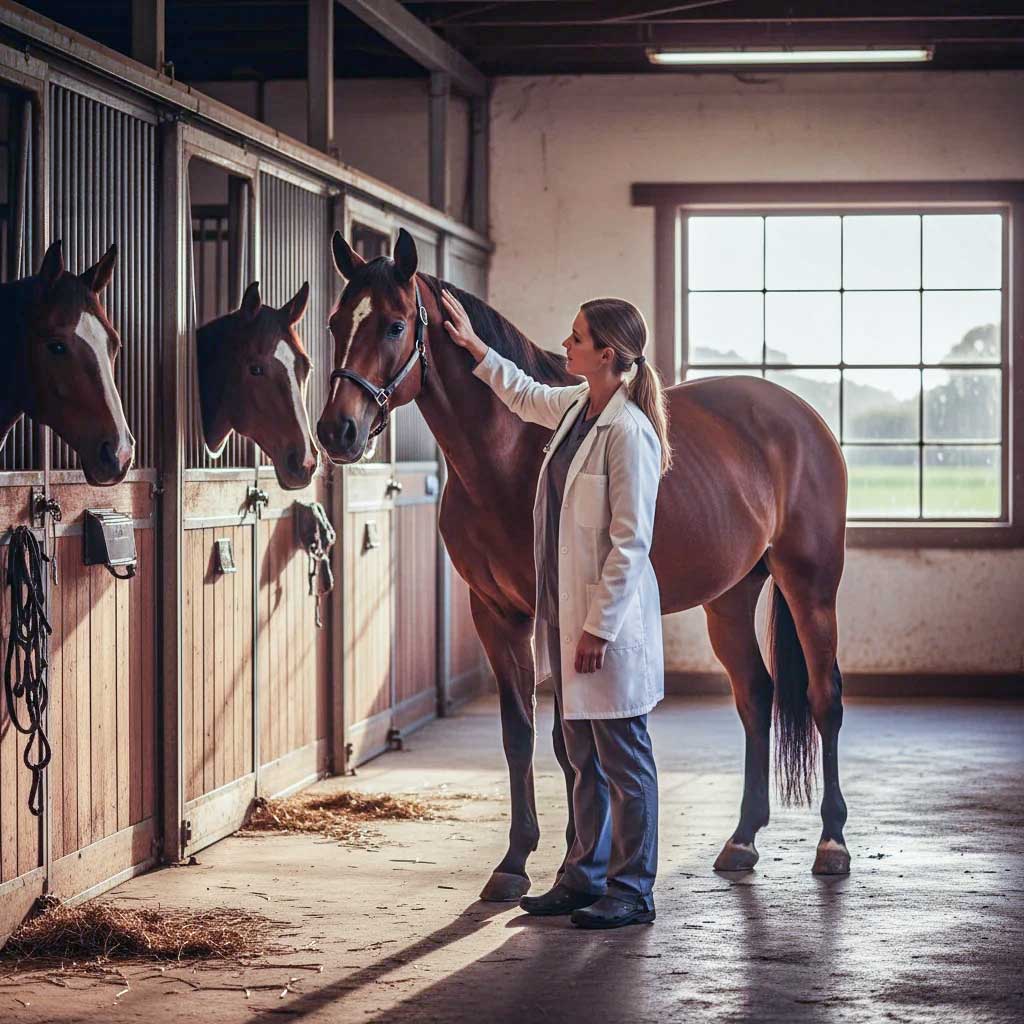
Then comes the gentle contact. Hands move with slow respect over the neck, back, joints, and legs, tracing muscles, tendons, and texture.
The horse’s reaction is immediate. Slight flinches or relaxed sighs form the language between species. Through touch, the examiner learns what cannot be seen: swelling, heat, tenderness, or fatigue.
A skilled touch carries no judgment; it simply observes. Every sensitive fingertip interprets signals sent by a living being with memory, emotion, and instinct.
Listening Through Movement
After stillness, motion reveals truth.
Walking, trotting, or lunging allows pain, stiffness, or imbalance to come to light. The goal isn’t to find fault but to recognize where harmony fades.
A horse in discomfort shows hesitation before lifting a leg, loses swing in the stride, or leans subtly to one side.
Here, examination turns cinematic, and movement under natural light becomes the reflection of wellness or struggle.
Hakan Kaya often says, “If you watch carefully, the body will tell you the whole story.”
The Role of Emotion
Health isn’t purely mechanical. Stress, fear, or tension alter muscles and heart rate. Horses sense their examiner’s energy. Calm presence lowers anxiety, allowing a true read of condition.
Every examination must respect the emotional state, that’s where science meets soul.
When the horse feels safe, it reveals everything honestly. In that moment, medicine turns into empathy.
Guiding Toward Healing
The reason we examine is not to label problems but to guide recovery.
Routine checks catch early signs before they turn severe, heat in joints, small swellings, subtle weight loss, changing coat shine.
Proper lighting, cleanliness, and quiet surroundings make every inspection more accurate and kind.
Recording observations adds structure, but the heart of the process remains the connection.
Closing Thought
An equine examination is the purest dialogue of trust, a moment when the horse allows its silence to be read. The depth of care lies not in tools but in awareness, patience, and compassion.
Written by Hakan Kaya for Equine Story, reminding us that healing begins the moment we truly listen to a horse’s quiet language.